Tag Archive | "running"

Ultra Marathon Drop Bag

10 Things to Remember in your Ultra Marathon Drop Bag

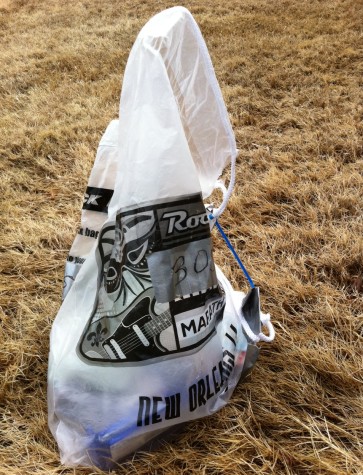
Most ultra marathons offer the option of leaving a ‘Drop Bag’ at various points along the course.  This offers runners the opportunity to have needed items available throughout the race.

Drop bags can be anything from a clear plastic bin to a plastic bag to a duffle bag.  Since most races will specifically dictate what is or isn‘t allowed, be sure to check your race website.

As for which is best, my personal preference is a clear plastic container, about the size of a shoebox,  that allows you to easily find what you‘re looking for. What you’ll need to pack depends largely on the race distance, the layout of the course, and the offerings at aid stations.

While the following is a list of suggested items to pack, you’ll want to make sure that you don’t have so much ‘stuff’ that you spend a lot of time rifling through your bag to find what you need.

Also, make sure that the things you need are placed at the appropriate aid stations.  For example, if you’re packing a headlamp in a race bag, you’ll want to make sure that it will be at the aid station you’ll pass as it’s getting dark.  Likewise, suncreen won’t do you much good at night.

Most of all, remember that someone is kind enough to haul your ‘necessities’ to the aid station so that you’ll have what you need so DO NOT OVERPACK.  Happy Trails…

Fuel:  (Gels, Energy Bars, Electrolyte tablets) Although most ultra marathons offer a standard fare of sweet and salty snacks, you will want to make sure you have plenty of what your body is used to.  I find that cutting energy bars into bite sized pieces and putting them in a Ziploc works for me.

Extra shoes:  Especially for ultras of 50 miles or more, you may want to consider having an extra pair of shoes.  You may also want to consider making sure that your ‘spare pair’ is at least a half size larger since your feet will most likely swell.

Extra Socks:  Dry feet are happy feet.  Period.

Extra Clothes:  Know your race.  Check the weather forecast and be prepared.  If there’s a chance of rain, pack a light water-proof jacket.  If it’s a scorcher, getting out of sweaty clothes before the sun goes down will help with chills.  Temps in some races can vary 30-40 degrees between day and night so be prepared.

BodyGlide:  Whether you prefer Glide, Vaseline, Desitin Clear, or some other goo, you’ll want something on hand in case chaffing becomes an issue.  This should be in EVERY drop bag.

Blister Kit: You can buy these or make your own.  Basically, you need a sterilized needle and a bandage.  Frankly, I like duct tape as well or better than any type of band-aid I’ve tried.  If you run far enough, you WILL have a blister.  Use the needle to relieve the pressure, cover tightly with your bandage of choice and move on.  Just make sure you store the needle so that it won’t ‘poke’ you while you’re looking though your bag.

Sunscreen:  As you sweat (or go through water crossings if you’re lucky) you’ll want to re-apply.  You’ll most likely hurt in enough places when the race is over that you won’t need a sunburn to remind you of your accomplishment.

Headlamp (and extra batteries):  Obviously, you won’t need this for most 50K’s but for longer races such as 100 milers, a headlamp is your best friend.

Bug Spray:  I include this for personal reasons after running 50 miles at Ouachita and swatting horseflies for hours.  Likewise, you will find that a battle against mosquitoes is one you won’t win.

Small pack baby wipes: All I can say is that a clean ___ is a happy ___.  Fill in the blanks as you wish.  You can never go wrong with baby wipes.
Posted in Ultra MarathonComments (0)

10K in Knoxville, 2010

Silent Lessons … When Not Running

10K in Knoxville 2010

Most of you may know I am taking a mini-break from running while healing from Plantar Fasciitis in my right foot. I’m almost there, kids ;-). I have been running a little here and there, but I’ve consistently been listening to my foot while running these past few months. I also listen to my foot the days following a run, because it speaks to me and tells me how it’s feeling.

Taking a break from running has helped me look inward with regard to my running. Looking back at 2010, running seemed like such an outward event. I am still every bit the runner I was last year, but probably haven’t even run 20 miles this year. Funny, I’m not too bothered by that.

I firmly believe that listening to your body is the key that will determine the life of your running career (or hobby, or whatever it is). If you don’t take heed and really listen, you may be forced to take a short, or long, or indefinite break from the sport, hobby and passion that you love. I can’t say there was anything in particular that could have led me to believe I would develop Plantar, but I also can’t say I was listening very closely to any issues that may have been developing as they happened.

The injury itself is really not too big of a deal, and as long as I keep up my massages, stretches and icing, I should be back on track to run the Palmetto Half Marathon on April 16th (one of the best half marathons I’ve ever run … hummm, I think I say that about almost every half marathon I’ve ran, ha, ha, ha)! Seriously, the Palmetto Half is an amazing event.

I truly believe this break from running will make me an even stronger runner when I get back to it. I already know it has made me a smarter runner because now I know how to listen better and what to listen for, and I won’t think twice about taking a week of if I feel I need to. If my body tells me that is what it needs.

It’s not about “racking up the mileage” for me anymore, or seeing how many races I can squeeze into one month, or how many half marathons I can run in a single year. It’s about being a smart runner, a runner who listens, so that I can be a runner for as long as there is breath within me. Or until my legs just give out at 90-something years old ;-).

In the mean time, I have been spending hours at the gym focusing on building muscle and gaining strength. Fitness is a huge part of my life, so if I can’t run I will find something else fitness-related to keep me healthy and active until I return to the pavement. And even then, I think strength-training will be much more a part of my fitness regime than just running alone.

Posted in 5K, Events, Half Marathon, Injuries, Marathon, Running, UncategorizedComments (1)

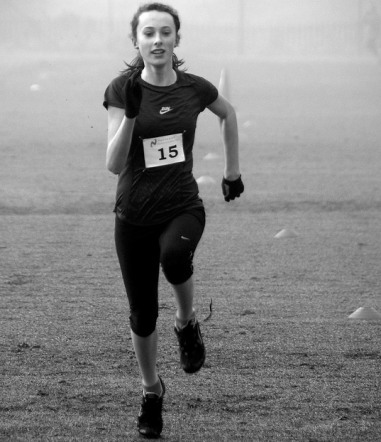
Girl Cross Country Running

Building Strength and Preventing Injury: Lessons from Cross Country

Building Strength and Preventing Injury: Lessons from Cross Country

Jason Fitzgerald (or Fitz) is the founder of Strength Running, a 2:44 marathoner, and online running coach. He loves running the trails, strong coffee, and cycling. Strength Running unleashes Fitz’s passion for helping runners achieve their best and prevent running injuries. Subscribe to get instant updates from Strength Running.

Cross country is like the middle child of distance running: often forgotten and undeservedly ignored. Typically reserved for high school and college runners, cross country offers numerous benefits that aren’t often utilized by runners training for track or road races.

Nearly all aspects of cross country – from hill workouts, avoidance of the track, and a focus on a long base period – provide injury prevention lessons.

Here’s how you can learn from cross country and build running strength while avoiding injury:

Skip the track and hit the dirt. In college, we only ran about 25% of our fast workouts on the track. In high school, none of them were on the track. Instead, we chose to run on grass fields, wooded trails, dirt paths, and crushed gravel that gave our legs an even more forgiving surface than the hard track.

The more uneven trail and grass surfaces helped us improve our coordination and allowed us to run more total mileage. And let’s not forget that the consistent left turns on a track can cause muscle imbalances that often lead to injury.

Tracks are very useful tools to run workouts, but often you can spare your body by choosing other venues.

Focus your workouts on hills and tempo runs. For most of our cross country season, our bread and butter workouts were hill repeats and tempo runs. Cross country demands leg strength and a huge aerobic engine, both of which are improved with hills and tempo workouts.

Ideally, run your tempo on a soft surface off the track, like a dirt path. Tempos increase your body’s aerobic capacity – or put in a sexier way, they help you run faster without getting so fatigued. And everybody wants that!

Hills are perfect for developing leg strength (like you’d get from the gym) and speed (like you’d get on the track). There is less impact on your legs in uphill running and it reinforces proper running form, so they prevent overuse injuries and help you become a more efficient runner.

Run more volume! Too many runners think they can run fast on the track and in their local 5k without running a lot of miles. That’s simply not true. To maximize your potential for your goal race – and your long-term development as a distance runner – it’s important to run as much as you can within the limitations of experience, safety, and desire.

To increase mileage, back off on the intense workouts. Learn from the previous lesson and switch a fartlek or interval session to a hill workout. Replacing grueling interval workouts with volume will help you become a faster runner in the long-term. High total mileage was always reinforced during cross country season and often took a backseat to fast workouts during track. Don’t make this mistake.

Barefoot strides are your best friend. During the high school and college years, cross country training and racing happened over the summer and fall. We took advantage of these warm months and ran barefoot strides after most of our distance runs.

Barefoot strides are one of the most effective injury prevention strategies that you can implement in your training. They strengthen your feet and lower legs and reinforce efficient running form. Sprinting also recruits many more of your muscle fibers, improves form, and makes running slower seem easier. Start with two 100m barefoot strides on a well-manicured field and progress to 6-8 over a month or two of training.

Preparatory mileage is crucial to success. A lot of new runners don’t give the base phase of training enough attention, or devote a few weeks to easy running before they start with harder workouts. This is a mistake and they’re missing a big opportunity to improve their fitness.

A college cross country season starts at the very end of August, but training begins usually in late May. During these three months, the majority of focus is on easy running: building an enormous endurance base that will support the harder workouts and races that come in the fall.

This long period of easy base mileage includes strides, but rarely any structured workouts before August. It’s more difficult to get injured during easy mileage – and easier to get injured if you skip this base phase of training.

I’ve run 8 seasons of competitive cross country in high school and college (and another “season” after college with two more races). They’re by far my fondest memories of running: serene trails, long runs in summer heat, and the feeling of morning dew on your bare feet.

Cross country is sometimes the forgotten middle child of running, but let’s look at the lessons it provides and learn from them. I think we can all prevent an injury or run a little faster if we take these lessons to heart.

[image: easylocum]

Posted in Injuries, RunningComments (0)

Memphis Man Has Run a Mile a Day, Every Day for 39 Years

Retired Memphis dentist Jon Simpson has never run in or competed in an endurance race in his entire life.

However, Simpson has run at least a mile every day for 39-years and counting. His impressive streak, which is the 6th longest of it’s type according to the U.S. Running Streak Association, started way back in 1971.

Heck, Jon doesn’t even measure his miles by car or high-powered GPS. He just gets out and runs for at least 30 minutes every day.

Jon started running, several decades ago now, to strengthen his right leg which is affected by polio.

Read More About Jon Simpson’s Streak at The Commercial Appeal

Congrats to Joe on his impressive streak!

Posted in RunningComments (0)

Mary Keitany – World Half Marathon Record Holder

Mary Keitany Demolishes Half Marathon World Record at the RAK Half

Kenya’s Mary Keitany destroyed the half marathon World Record at the RAK Half Marathon today in Ras Al Khaimah, UAE when she ran a 1:05:50.

Lornah Kiplagat had set the World Record back in 2007 at the IAAF World Half Championships in Italy with at time of 1:06:25.

[Read More on Mary’s Historic Race]

Way to Run It Fast Mary!

Posted in Half Marathon, RunningComments (0)

First Robot Marathon (26.22 miles) in Japan

Sorry Humans! First Robot Only Marathon

The first robot marathon is set to take place in Osaka, Japan, on February 24th.  The race will feature no humans, simply mechanical robots that will cover 26.22 miles.

The robots will have to “run” around the 328ft course 422 times to complete the marathon.

It will take them an estimated four days to finish.

Robot Robovie-PC said in Japanese: “Stretch to prevent injuries and aim to run the whole marathon.”

If the robots fall over they have to get back up on their own.  However, if their batteries get low or die than are allowed to be changed by a human.

No word yet on when the Vibram-Robot, Naresh Kumar, will arrive in town for the race.

Check out the video below to see the robots putting down some practice laps:

With the new Boston Marathon Qualifying Times released yesterday these robotic tadpoles would be systematically challenged to qualify.

Posted in MarathonComments (0)

Better Run It Fast for New Boston Marathon Qualifying Times

Better Run It Fast for New Boston Marathon Qualifying Times

The Boston Athletic Association (BAA) announced on Wednesday that they are lowering the time to qualify for the Boston Marathon by 5 minutes for both genders of all age classifications.

The change is in response to the 2011 Boston Marathon filling up in just over 8 hours.

There will also be no 0:59 second leeway on the times. (Example: A 3:05:59 will no longer qualify you. You have to actually be under 3:05.)

The New Boston Marathon Qualifying Times

AGE GROUP MEN WOMEN
18-34 3hrs 05min 3hrs 35min
35-39 3hrs 10min 3hrs 40min
40-44 3hrs 15min 3hrs 45min
45-49 3hrs 25min 3hrs 55min
50-54 3hrs 30min 4hrs 00min
55-59 3hrs 40min 4hrs 10min
60-64 3hrs 55min 4hrs 25min
65-69 4hrs 10min 4hrs 40min
70-74 4hrs 25min 4hrs 55min
75-79 4hrs 40min 5hrs 10min
80 and over 4hrs 55min 5hrs 25min

The updated qualifying times will go into effect for the 2013 marathon.

Fair or unfair?

I now, only, have to run a 3:05 to qualify. Happy up!

Posted in MarathonComments (4)

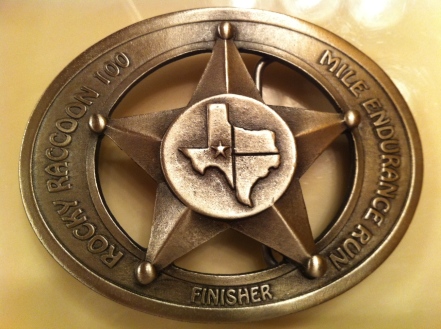
Rocky Raccoon 100 Mile Trail Race Finishers Belt Buckle 2011

2011 Rocky Raccoon Finisher’s Belt Buckle

Here is the Rocky Raccoon 100 Mile Trail Race finisher’s belt buckle from the 2011 race that took place in Huntsville, Texas.

The race is really well put on and has superb aid stations throughout the 20-mile loop.

Rocky Raccoon Race Website

2011 Rocky Raccoon Results

Posted in Bling, Featured, Medals, Ultra MarathonComments (0)

Harpeth Hills Flying Monkey Marathon Swag

The 10 Best Marathons in Tennessee

Here is a look at The 10 Best Marathons in Tennessee. The list is up for debate and based on some personal preferences and experiences. Feel free to drop a comment below with your thoughts on any of the marathons listed below or any that might have been omitted.

  1. Harpeth Hills Flying Monkey Marathon (race website)- If you have never run a marathon then don’t dare attempt this one as your cherry-thon.  It is by far the best in Tennessee and the most beautiful, but it is extremely challenging with nearly 10,000 feet of ascents and the same amount of descents in the beautiful Harpeth Hills near Nashville.  The best race swag you will ever receive at any race (this side of a belt buckle) is at the Monkey.  Race participants in 2010 received a long sleeve personalized tech shirt, a tie-dyed Monkey t-shirt, and a beautiful wooden Monkey finisher’s medal.  And yet the post-race food buffet was even better than the race and swag combined. But this race fills up fast, like really fast, like 32 minutes fast.
  2. St. Jude Marathon (race website)- The most meaningful marathon you can run in Tennessee and perhaps the United States. All of the proceeds go to St. Jude Children’s Hospital that treats children with cancer regardless of ability to pay.  The race is in early December and the weather is usually cold but good running weather.  It starts right outside of Auto Zone Park and finishes inside the stadium, after rounding the outfield warning track.  During the 26.2 miles you hit almost every major Memphis landmark including the Pyramid, Fedex Forum, Sun Studios, the Memphis Zoo, along with running through the St. Jude campus early in the race with several of the patients outside cheering you on. They will inspire you to run further and faster.  The race is a must-do for any Tennessean and highly recommended for out-of-staters as well.
  3. Andrew Jackson Marathon (race website) – My hometown marathon so naturally it scores a bit higher with me than it probably would with others. The course is beautiful and rolling. Approximately 20 of the miles are out in the country, with the rest of the race in peaceful suburban neighborhoods with almost no traffic. It starts and finishes at Union University.  The field is usually small (less than 100), which I have come to enjoy, and most that run it have run it before at some point.  The AJM also includes a half marathon and 5K as well on race day. The finisher’s medal was actually a paper weight but aren’t all medals once they make it home?
  4. Rock Creek Scenic City Trail Marathon (race website)- The only trail marathon to make this list. It is truly a great and peaceful run out in the woods of Chattanooga.  If you love the outdoors and endurance running then you won’t want to miss this beautiful trail run from the Rock Creek people.
  5. Blister in the Sun Marathon (race website) – The toughest marathon in Tennessee due to three things: 1. heat, 2. repetition, and 3. hills.  The Blister lives up to it’s name as it takes place in early August which is a no-no for most Tennesseans to even run out to their car to grab their Marlboros.  Race day temps at the inaugural blister reached a blistering 89 degrees. The course at Cane Creek park in Cookeville consisted of 5 loops through a park before ascending a hellacious hill up and around Cane Creek elementary school.  The field in 2010 consisted of just 14 freaks, all with resumes that would easily have condemned the Bush administration if it had forced terrorists to attempt their feats.  Blister and Flying Monkey are by far the two toughest marathons in Tennessee.  The RD is a sub-3 hour freak so good luck beating him on his home course.
  6. Southern Plunge Marathon (race website) – The inaugural Plunge in 2010 was surprising in how many things they did extremely well right off of the bat.  The Race Director put together an impressive logo that was then placed on top-notch Zorrel tech shirts and finisher’s medals.  The course was tougher than expected.  I had been told there was a small hill at mile 2. Well that was correct. It was the smallest hill that day.  The course had several climbs and the second half was rather taxing to most of the runners.  There is a rumor already circulating that the course will be changed for the second edition of the Plunge in 2011.
  7. Knoxville Marathon (race website) – The best part of this marathon, especially for Tennessee Volunteer fans, is that you get to run the last 50 yard to the finish inside of Neyland Stadium.  The first half of the course is hilly, but it levels out a bit towards the end.  Nearly 700 people raced it last year.  The race t-shirt and medal were sub-par but that is nitpicking a bit.  There are better options to run a marathon in Tennessee, but if you are nearby Knoxville when this one is held you should check it out.
  8. Country Music Marathon (race website) – One of the biggest half marathons in the United States, as well as one of the most overrated marathons in America. It’s a Rock N’ Roll series event which means it will be very large and populated. Usually there is around 26,000 runners for the half and just 4-5,000 for the full.  The best part of this race is the first half, even with the thick stack of people, where you run down Broadway and up Music Row.  After the 26,000 half marathoners divert off for the half finish the course gets extremely boring, hilly at points, and runs through the most industrial parts of Music City.  If you want to run in extreme weather this might be the right marathon for you.  In 2009, the marathon had temperatures in the mid 80’s and last year 75% of marathoners got diverted to a shortened finish (around 22 miles) due to tornadoes in the area.
  9. Endorphin Marathon (race website) – One of the younger marathons on this list. It is located in Jackson, Tennessee and takes place around Labor Day each year.  The course is relatively flat and easy.  The field has grown each year and the swag is pretty impressive from what I’ve seen of it.  There is also a half marathon, 10K and 5K that takes place the same morning.  With a little bit more promotion and exposure this hidden gem of a marathon could become much larger and even rival Andrew Jackson.
  10. Rutledge Marathon (race website) – If you have ever wanted to finish a marathon on a working-farm then this is the race for you.  The race is rather small but the race director does a very good job of making everyone feel welcomed and appreciated for coming out.  Rutledge is in east Tennessee so the course is one rolling hill after another, but the hills are minor and help keep the legs fresh throughout the race.

Posted in MarathonComments (7)

Recommended Race: Strolling Jim 40 Mile Run

Recommended Race: Strolling Jim 40 Mile Run

From time to time here on Run It Fast we feature races that we highly recommend because one of us have run the race before and had a great experience doing so.

The Strolling Jim 40 Mile Run in Wartrace, TN is one of these races. It’s an ultra marathon of 40 miles that is run entirely on paved roads.

The race is challenging and very hilly. The heat and humidity can also take a toll on you as the day progresses.  SJ40 usually comprises a collection of elite athletes, ultra veterans, and newbies to ultras.  There is always a friendly environment between all of the runners and you get a lot of bang for your buck with a pre-race pasta dinner and post race meal included.

The 2010 edition of ‘The Jim’ was won by 2007 Badwater champion Valmir Nunes, of Brazil, with at time of 4:44:43.  The last finisher crossed the line in 12:46:37. The race has no cut off and waits for everyone who wants to finish it.

The 33rd annual Strolling Jim takes place on May 7, 2011.  Signups are underway and the race will be capped at 250 runners (101 ran it last year).

Strolling Jim 40 Miler Website – (Sign Up at UltraSignUp.com) -$50 before Feb 28, $60 after

Race Director Mike Melton can be reached via email at mike@mcmelton.com

Strolling Jim 40 Mile Ultra Marathon Review

Posted in Ultra MarathonComments (0)


Run It Fast on Twitter

twitter button free

Archives